
Trends in Institutional Demand and Product Development
A useful read for procurement teams that need to understand how institutional demand influences laboratory consumable sizing, packing, and product planning.
Read articleLaboratory Consumables Solutions
For teams sourcing laboratory consumables solutions, this page brings the serological pipette line into one buying view. The product page shows size-coded options from 1ml to 100ml, clean handling positioning, and packaging detail that supports catalog setup and repeat purchasing.
The serological pipette series uses medical-grade PS, bi-directional scales, and sterile packing formats to fit routine liquid transfer work. Buyers can compare the volumes, item codes, and packing counts before moving to quotation or sample review.
This layout is built for procurement teams that need practical variant control, not marketing language. It keeps the core selection points visible so distributors, laboratories, and supply coordinators can check the details quickly.
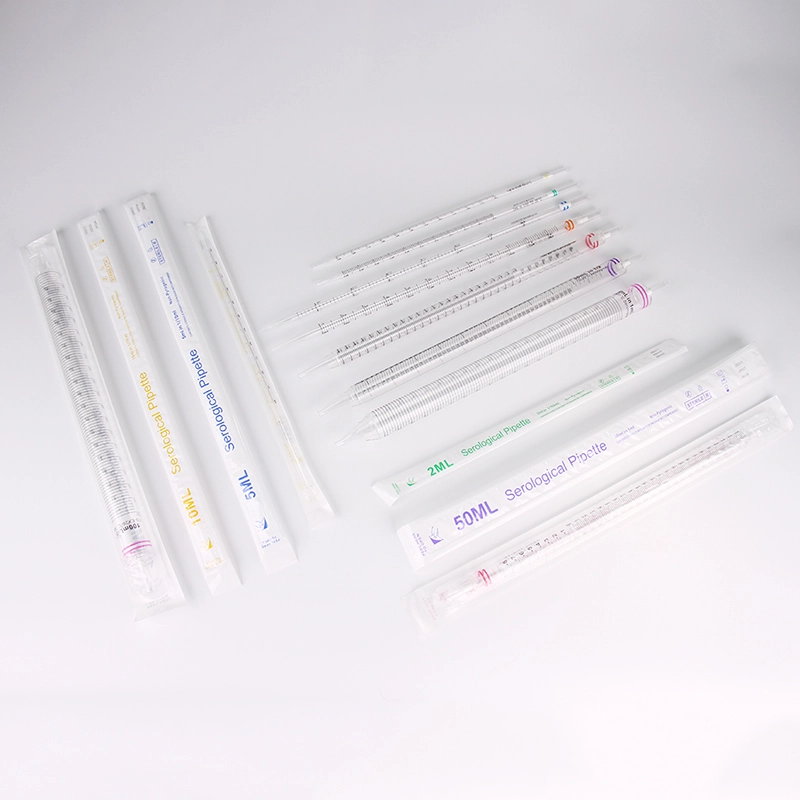
AMNGENT serological pipettes are positioned for routine laboratory liquid transfer where readable scales, clean packing, and repeatable size selection matter. The product page highlights medical-grade PS, e-beam sterile processing, DNase/RNase-free status, non-pyrogenic positioning, and volume options that cover common bench work from 1ml to 100ml.
| Product Name | AMNGENT Serological Pipette |
|---|---|
| Product Type | Laboratory liquid transfer consumable |
| Volume Range | 1ml, 2ml, 5ml, 10ml, 25ml, 50ml, 100ml |
| Color Coding | Yellow, green, blue, orange, red, purple, and pink |
| Nozzle Structure | One-piece extrusion style for 1ml, 2ml, and 5ml; two-piece sonic welding style for 10ml, 25ml, 50ml, and 100ml |
| Material | Medical-grade PS |
| Sterility and Cleanliness | E-beam sterile, DNase/RNase free, non-pyrogenic, non-cytotoxic |
| Packing Options | Individual paper-plastic bag or individual plastic bag, with bag and carton counts by size |
| Handling Feature | Polyolefin filter protection helps reduce equipment damage from excessive suction |
| Order Note | Confirm size code, packing style, and estimated quantity before quotation and sample review |
These articles help sourcing teams compare demand trends, packing details, and supplier portfolios before confirming a purchase plan.
A useful read for procurement teams that need to understand how institutional demand influences laboratory consumable sizing, packing, and product planning.
Read articleThis article helps buyers compare sterile packing formats, cleanliness terminology, and handling expectations for pipette procurement.
Read articleA comparison article for sourcing teams reviewing product range, volume coverage, and supplier lineup before building a lab consumable order list.
Read articleThe following feedback reflects common buying checks for laboratory consumables and repeat-order planning.
5/5 Rating
"We reviewed the 10ml and 25ml options for a hospital supply program. The volume coding and bag counts made it easier for our team to align stock labels and packing checks."
Laboratory Procurement Manager, United Kingdom
5/5 Rating
"The sterile packing notes and DNase/RNase-free positioning were clear enough for our internal review. That helped us shortlist the pipette for our distribution catalog."
Senior Sourcing Specialist, Singapore
5/5 Rating
"Our quality team liked the way the item codes, nozzle structure, and volume mapping were presented. It made sample comparison and repeat-order planning much more straightforward."
Export Purchasing Lead, Germany
These answers help buyers review the main technical points before they request a quotation or place a replenishment order.
Buyers should confirm the item code, target volume, color code, nozzle structure, sterilization method, packing format, carton count, and expected order quantity before requesting a quotation or sample review.
The volume and color mapping makes stock control easier and reduces picking errors during routine laboratory work. A clear code system also helps distributors set up catalogs, labels, and repeat-order records.
The ascending and descending scale helps operators read both the dispensed amount and the remaining amount more clearly. That is useful for repetitive liquid handling where quick visual checks matter.
The page indicates e-beam sterilization together with DNase/RNase-free, non-pyrogenic, and non-cytotoxic positioning. Buyers should still align the final selection with the project's handling environment and internal quality checks.
The product page shows individual paper-plastic packing and individual plastic packing, with bag and carton counts listed by size. This helps sourcing teams compare shelf storage, transport protection, and unpacking convenience.
Procurement teams should compare scale clarity, liquid handling feel, tip consistency, packing integrity, and label accuracy across the sample and the target order. A short acceptance checklist makes repeat ordering easier.